Travel Agency & Tour Operator Website Development
A travel website should make each package understandable and capture the information a team needs to prepare an accurate quotation. This guide covers package pages, itinerary structure, custom-trip qualification and the handoff from enquiry to quotation.
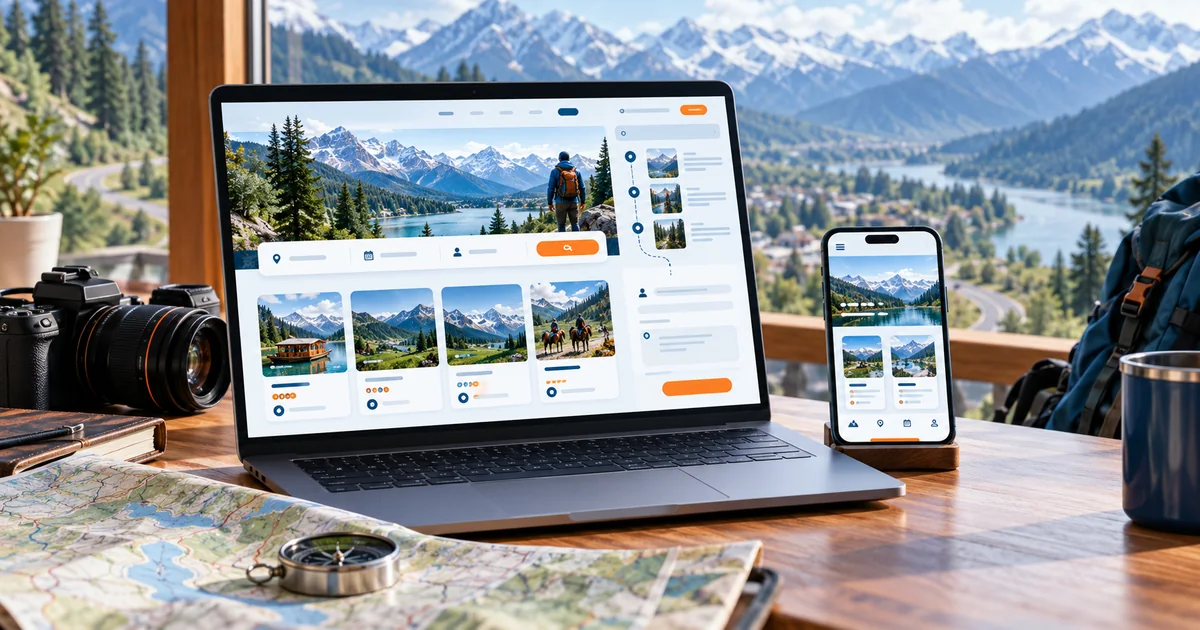
- What turns a package page into a usable enquiry
- How to structure day-by-day itineraries and inclusions
- Which custom-trip fields qualify an enquiry before a quote
- How quotation and booking handoff should work internally
In this guide
- Turning package browsing into useful enquiries
- A complete tour-package page
- Day-by-day itineraries and inclusions
- Custom-trip forms and qualification
- Quotation, payment and booking workflows
- Building trust with factual travel information
- Destination content and search visibility
- Scope, integrations and ongoing costs
- Prepare your project brief
- Frequently asked questions
Turning package browsing into useful enquiries
Travel visitors browse before they enquire. They compare destinations, durations and inclusions, often across several operators. A package page that answers the basic questions — where, how long, what is included, who it suits — earns the enquiry; one that only shows photographs does not.
Give every major package its own page with a stable URL, and group packages by theme or region: Kashmir valley tours, Ladakh circuits, pilgrimage routes, family holidays or honeymoon trips. Clear grouping helps visitors compare like with like.
Every package page should end with one action: request a quote for your travel dates. The form should collect dates and traveller counts, because a price without those is guesswork.
A complete tour-package page
A useful package page contains a consistent set of elements, so visitors can scan quickly:
- Duration, starting point, destinations covered and the best months to travel
- A short summary of who the package suits — families, couples, groups or solo travellers
- Day-by-day itinerary with travel, activities and overnight stops
- What is included and excluded, stated clearly
- Accommodation category used, where the operator has confirmed it
- Pickup and drop details, and any permits or documents travellers must arrange
- A photo gallery of the actual destinations, not stock imagery of unrelated resorts
Inclusion wording prevents most disputes. State plainly whether meals, entry tickets, permits and guide charges are included, and what travellers pay directly.
Day-by-day itineraries and inclusions
The itinerary is the core of the page. Write it as a simple day-by-day list: what happens, how much driving or walking is involved, where meals are taken and where the group stays. Travellers use this section to decide whether the pace suits them.
Keep itinerary content maintainable. Roads, timings and local conditions change, so the site should let the operations team edit a day's text without touching the layout. When an itinerary changes for a season, update the page rather than publishing a PDF that will age unnoticed.
Label optional activities and upgrades separately from included services so expectations stay clear.
Custom-trip forms and qualification
Custom itinerary requests are the most valuable and the most time-consuming enquiries a tour operator handles. A well-designed form qualifies the request before a planner spends an hour on a quote that was never realistic.
| Field | Why the planner needs it |
|---|---|
| Travel dates or month | Determines season, availability and pricing band. |
| Traveller count with ages | Affects vehicle size, room configuration and activities. |
| Pickup city and route preference | Defines the itinerary shape and transfer costs. |
| Budget range and comfort level | Prevents quotes for accommodation the traveller will not book. |
| Contact method and response time | Keeps the follow-up on the right channel. |
Keep the form short enough to complete on a phone. Five well-chosen fields qualify better than fifteen that nobody fills.
Quotation, payment and booking workflows
The website ends at a qualified enquiry; the quotation happens in the office. Define internally who receives which enquiry, how quickly a first response goes out, and how quotes are shared — usually a PDF or a branded quotation format sent by email or WhatsApp.
Advance payments, receipts and cancellation terms should follow a documented process. If the agency uses a CRM or booking system, the form can feed it directly; if not, a shared inbox with clear ownership works at modest volume.
A family of four asks for a five-day Kashmir trip in April with a comfortable hotel and an easy pace. The custom form collects dates, ages, pickup city and budget range. The planner replies with two options and a clear inclusion list. Because the qualification happened on the form, the first call is about preferences, not basics.
Building trust with factual travel information
Travellers trust specifics. Describe the vehicles used, the typical group size, the experience of guides and the accommodation categories honestly. Avoid superlatives and never present a generated or borrowed image as the actual hotel a guest will stay in.
Publish the agency's registration or trade details only if the agency wants them public, and keep the physical office address and phone numbers consistent everywhere. For travellers from outside the region, a real office address materially increases confidence.
Reviews and testimonials should come from genuine travellers, used with permission. Do not promise experiences that depend on weather or permissions the operator cannot control.
Destination content and search visibility
Destination guides — when to visit a valley, what a typical day costs, how to reach a town, what to pack — bring visitors to the site before they are ready to enquire. They also give the agency something useful to share on social channels.
Keep the content accurate and seasonal, and link destination pages to relevant packages. A page about travelling to Pahalgam in spring should link directly to the packages that visit it.
Do not publish dozens of near-duplicate pages for every town and month. A smaller set of genuinely useful destination pages performs better and is easier to keep current.
Scope, integrations and ongoing costs
Travel website scope depends on the number of packages, whether custom itineraries are a primary product and how enquiries flow into your internal process.
Core build
- Homepage with package themes and enquiry actions
- Package pages with itinerary, inclusions and gallery
- Custom-trip enquiry form with qualification fields
- Destination information pages linked to packages
- Contact details, office address and WhatsApp actions
Optional integrations
- CRM integration so enquiries route to the right planner
- Online payment gateway for advances
- Multilingual pages for international travellers
- Availability or departure calendar maintained by the team
Ongoing running costs to plan for
- Hosting and domain renewal
- Seasonal itinerary and package updates
- Photo and destination content refreshes
- Enquiry monitoring and response tracking
Want an honest view of which of these you actually need? Send us your requirements and we will scope it with you. You can also read our current pricing guide before you decide.
Prepare your project brief
A travel website brief should come from the operations team, not only marketing. Collect these before development.
- The package list with destinations, durations and inclusions
- Day-by-day itineraries the operations team can confirm
- Accommodation categories and transport details actually used
- The custom-trip questions your planners need answered
- The person who receives enquiries and the response-time expectation
- Approved destination photography, clearly sourced
- Any permits, documents or restrictions travellers must know about
Frequently asked questions
Discuss your travel website
Send us your package list and how quotations work today. We will propose a structure that captures the details your planners actually need.
Related industry guides
Hotel & Houseboat Website Design in Kashmir
How hotels, guesthouses and houseboat operators should present rooms, amenities and booking information so guests can enquire and confirm with confidence.
Restaurant & Café Website Design
How restaurants and cafés should present menus, timings, locations and reservations so diners can act in seconds, without heavy integrations they do not need.

Startup & SaaS Website Development
How founders should plan a startup or SaaS marketing site — positioning, feature pages, demo and trial journeys, and the split from the product application.
Looking for the broader picture? See our AI & automation services for follow-up page, or explore Web Development services.