Startup & SaaS Website Development
A startup website should make the product understandable before asking someone to book a demo, start a trial or join a waiting list. This guide covers marketing-site structure, conversion journeys and the boundary between the website and the product application.
- How to explain a new product to someone who has never heard of it
- Which pages a startup marketing site actually needs
- How demo, trial and waiting-list journeys should work
- When to stop adding website pages and start building the product
In this guide
- Explain the product and who it serves
- Building a clear marketing website structure
- Product demonstrations and benefit-led feature pages
- Demo, trial and waiting-list journeys
- Pricing, integrations and trust information
- Marketing site versus SaaS application
- Analytics, experimentation and performance
- Scope, integrations and ongoing costs
- Prepare your project brief
- Frequently asked questions
Explain the product and who it serves
A visitor who has never heard of your product needs three things in the first few seconds: what it does, who it is for, and what they should do next. Most startup homepages fail at one of the three, usually by describing technology instead of outcomes.
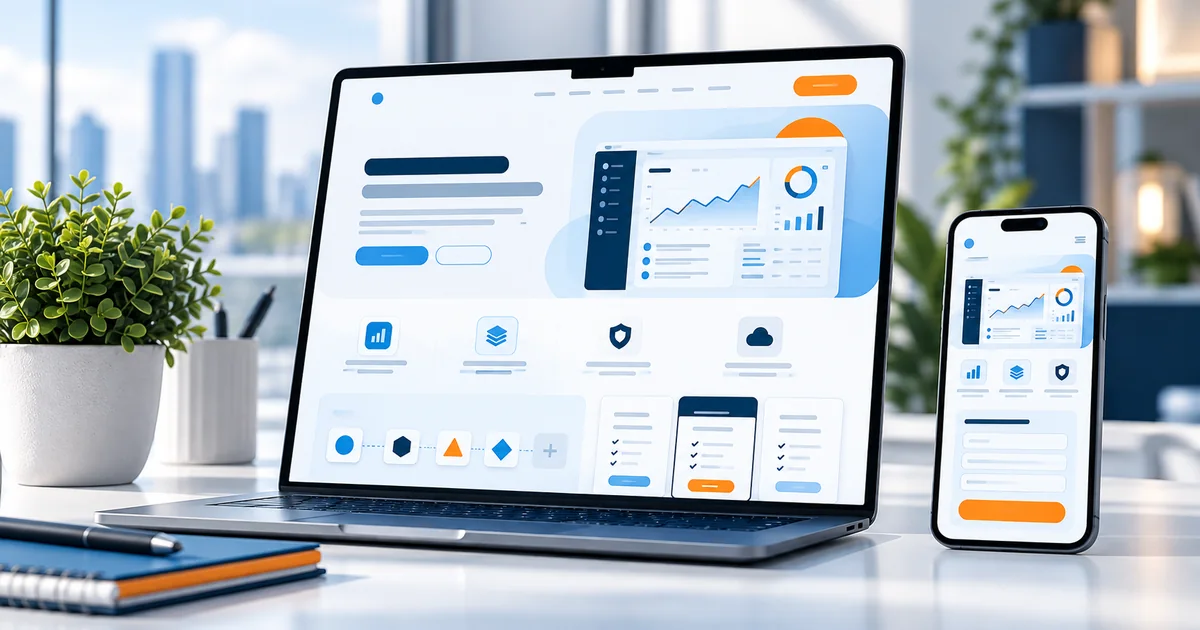
Write the headline as a plain statement of the problem solved and for whom. Support it with one concrete sentence and a product screenshot that shows the actual interface, not an abstract illustration.
Name the audience explicitly where the product is vertical-specific. A tool built for coaching institutes converts better when it says so on the homepage than when it says "for growing businesses everywhere".
Building a clear marketing website structure
Startup marketing sites carry a small, focused set of pages. More pages dilute the message until the product has enough substance to justify them.
- Homepage: positioning, key benefits, one primary action
- Features or use cases: two to five pages, each for a real user need
- Pricing: only when pricing is approved and clear
- About and contact: who you are and how to reach the team
Link every page toward the same conversion action — demo, trial or waiting list — and keep navigation simple enough that a first-time visitor always knows where they are.
Product demonstrations and benefit-led feature pages
Founders often over-explain features and under-explain value. Each feature page should open with the problem the user has today, then show how the product solves it, with a screenshot or short demonstration. Explain the benefit in the visitor's language, then the mechanism underneath.
Product screenshots must reflect the real interface, supplied by the founder. If the product is not ready to show, use an annotated mock-up labelled as such, and avoid describing capabilities that do not exist yet — prospects remember promises.
Short written walkthroughs and recorded demonstrations help buyers evaluate on their own schedule, which matters for products sold across time zones.
Demo, trial and waiting-list journeys
Each conversion action needs a distinct path and a clear owner.
A demo request is a sales conversation: collect company, role, team size and the problem they are trying to solve, then route the request to a calendar process. A trial signup is a product journey: create the account, send a verification email, and define what happens on day one — an empty dashboard is where trials die. A waiting list suit early products that are still taking shape.
An early-stage product for coaching institutes offers a demo request and a waiting list, not a trial, because onboarding is not automated yet. The site states that the team is onboarding a small group, collects institution size on the form, and promises a personal walkthrough. It is a smaller promise, delivered honestly.
Pricing, integrations and trust information
Publish pricing only when it is final enough to communicate — and if it varies by team size or usage, say so and support it with a calculator or a "talk to us" path. Half-published pricing creates more support questions than no pricing at all.
Integration pages should list what genuinely connects today, with setup notes, not a roadmap presented as availability. Trust content — security practices, data handling, status pages — should describe what actually exists and is documented. Never publish certifications, uptime figures or customer logos you cannot evidence.
Founder profiles and real company details add credibility for early products, because buyers are partly evaluating the people.
Marketing site versus SaaS application
The website and the product are different builds with different requirements. Mixing them up at the start is a common and expensive mistake.
| Scope | Purpose | Key requirement |
|---|---|---|
| Launch page | Validate interest with a waiting list before the product is built. | Clear positioning and an honest promise. |
| Marketing website | Explain the product, build trust and convert to demo or trial. | Content ownership and an analytics-informed structure. |
| Application MVP | Deliver the actual product behind authentication. | Product engineering, security and ongoing iteration. |
Founders should know which one they are funding. A polished website cannot compensate for a product that is not ready, and a working product still needs a site that explains it.
Analytics, experimentation and performance
Decide what a successful visit looks like before launch, then measure that. Demo requests, trial signups or waiting-list entries are the events that matter; page views are context, not a goal.
Set up analytics with named events for each conversion action, and review them monthly. Performance matters more than most founders expect — a slow landing page on a mobile connection loses signups quietly. Keep pages light, images compressed and third-party scripts to the minimum.
Test changes deliberately rather than redesigning constantly: one hypothesis, one change, enough traffic to read a difference. Early-stage traffic is small, so prioritise obvious wins over premature A/B testing.
Scope, integrations and ongoing costs
Startup website scope depends on how much product exists, how sales happen and whether a trial can be supported operationally.
Core build
- Positioning-led homepage with one primary conversion action
- Feature or use-case pages with real product screenshots
- Demo request or trial signup journey with a defined owner
- Pricing or "talk to us" page based on approved pricing
- About, contact and basic trust content
Optional integrations
- Waiting list with email confirmation
- Analytics events and conversion reporting
- Integration documentation pages
- Bilingual content for target markets
Ongoing running costs to plan for
- Hosting, domain and email infrastructure
- Analytics and marketing tool subscriptions
- Content updates as the product evolves
- Trial onboarding and demo scheduling effort
Want an honest view of which of these you actually need? Send us your requirements and we will scope it with you. You can also read our current pricing guide before you decide.
Prepare your project brief
Prepare these items before development. A clear brief keeps the marketing site from delaying the product.
- One paragraph describing the product, the problem and the audience
- Two to five use cases the site should cover
- Real product screenshots or annotated mock-ups from the founder
- The conversion action for launch — waiting list, demo or trial
- Approved pricing information, or a decision to keep it request-only
- Integrations that genuinely work today, with documentation
- Who will respond to demo requests and onboard trial users
Frequently asked questions
Plan your startup website
Share what the product does and who it serves. We will help you structure a marketing site that converts without overpromising what exists.
Related industry guides

Coaching Institute Website Development
How coaching centres should structure course pages, batch details and admission enquiries, and when an LMS or student portal is genuinely worth adding.

E-Commerce Websites for Kashmir Brands
How Kashmir retailers, craft sellers and product brands should scope an online store around catalogue clarity, payments, delivery and ongoing running costs.

Manufacturer & B2B Website Development
How manufacturers and B2B suppliers should structure product specifications, technical documents and RFQ enquiries so sales teams receive requirements they can act on.
Looking for the broader picture? See our software solutions for product builds page, or explore App Development services.